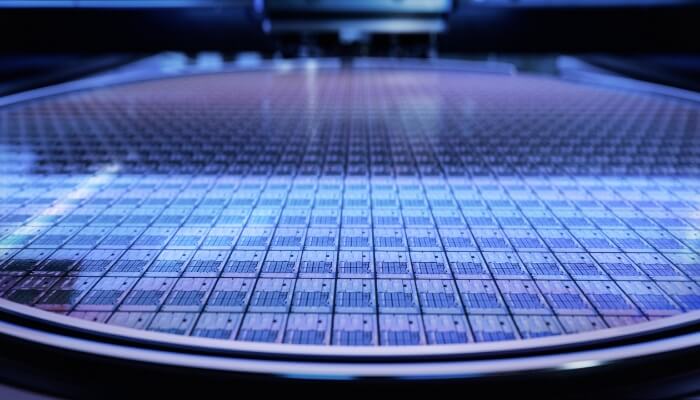
Grating/DOE
NSG's diffraction gratings and DOEs combine proprietary sol-gel glass materials with imprint technology, providing high performance and durability.



Product summary
By combining NSG's proprietary sol-gel glass materials or organic-inorganic hybrid materials with imprint technology, optical components with ultra-fine structures and excellent durability can be produced. Compared with conventional methods, this process enables high-quality, cost-effective production of diffusers, diffraction gratings, DOEs and MLAs.
NSG can fabricate a variety of microstructures, including blazed and rectangular-profile diffraction gratings, DOEs, V-grooves and moth-eye structures. In addition, NSG provides optical design and simulation services, offering custom design, prototyping and manufacturing solutions tailored to customer requirements.

Diffraction Gratings and DOEs Utilizing NSG Proprietary Materials
For imprint molding on glass substrates, NSG can recommend the optimum material from its proprietary sol-gel glass materials and organic-inorganic hybrid materials.
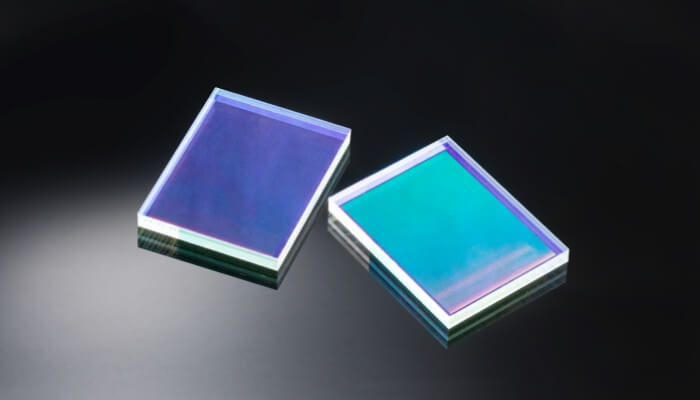
By imprinting sol-gel glass materials, NSG realizes diffraction gratings and diffractive optical elements (DOEs) with excellent heat resistance, durability, chemical resistance, laser resistance, and low thermal expansion characteristics. These optical components are used in demanding applications, including analytical instruments operating in harsh environments.
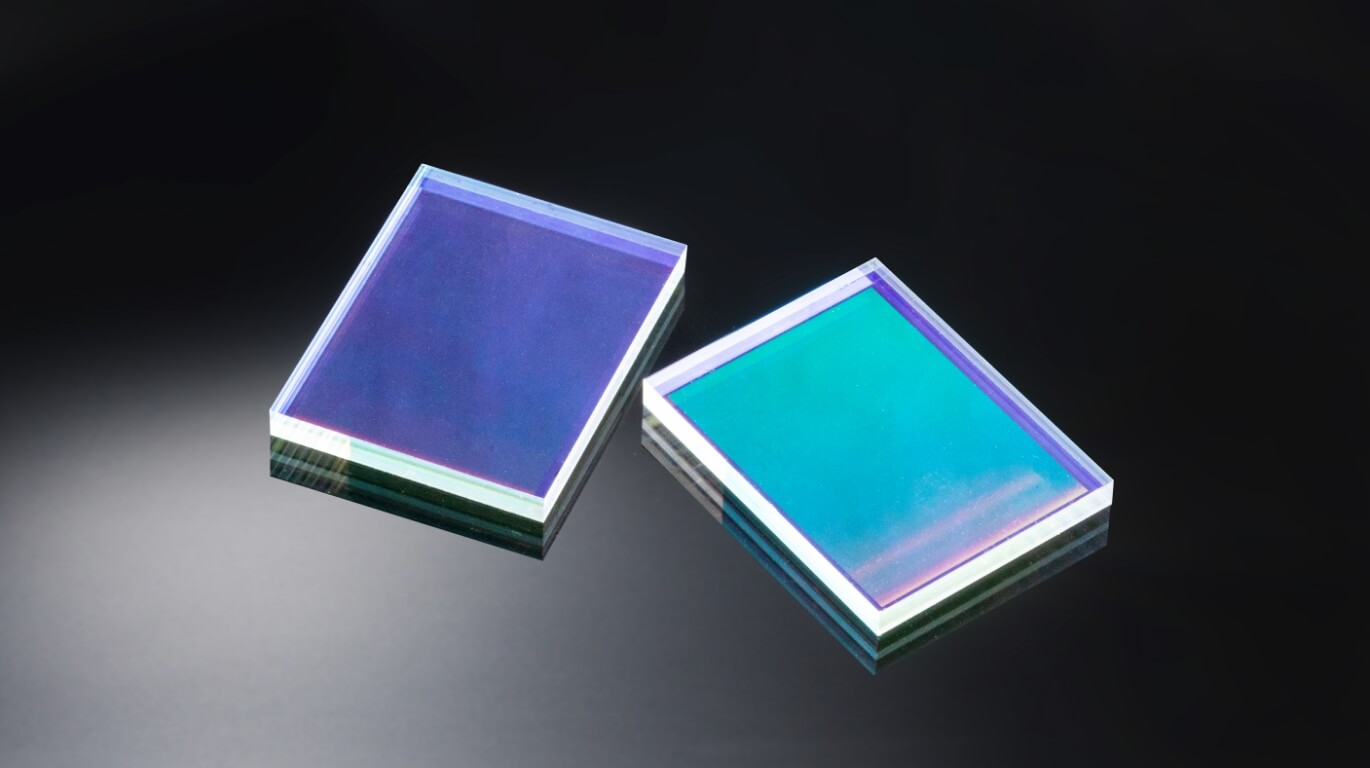
Appearance of Diffraction Gratings
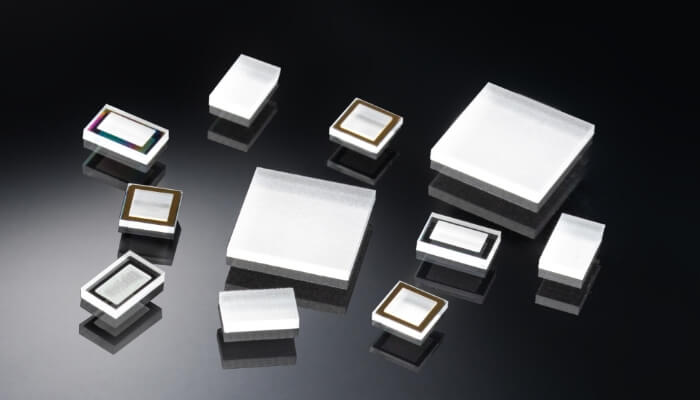
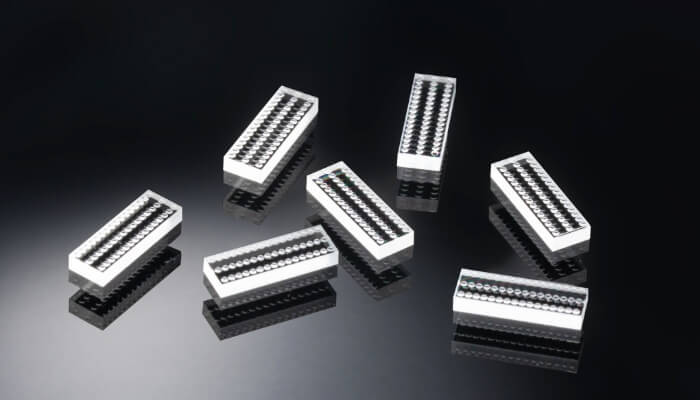
A Wide Variety of Diffractive Optical Structures
Through the fabrication of high-precision molds using technologies such as laser writing and electron beam (EB) lithography, followed by imprint replication, NSG can achieve stable mass production of optical components with ultra-fine structures, including diffraction gratings, DOEs, V-grooves, and rectangular-profile structures.
NSG also provides optical design and simulation services. By offering integrated support from optical design through volume production, NSG delivers diffraction gratings optimized for each application.
Enabling Compact Optical Modules
The use of DOEs helps improve the efficiency of projector optical systems and contributes to miniaturization. Highly efficient light control enables a reduction in component count and shorter optical paths, while the microstructured DOE supports compact optical designs.
In addition, the imprint process enables stable, high-volume production of DOEs with fine microstructures while maintaining consistent quality.
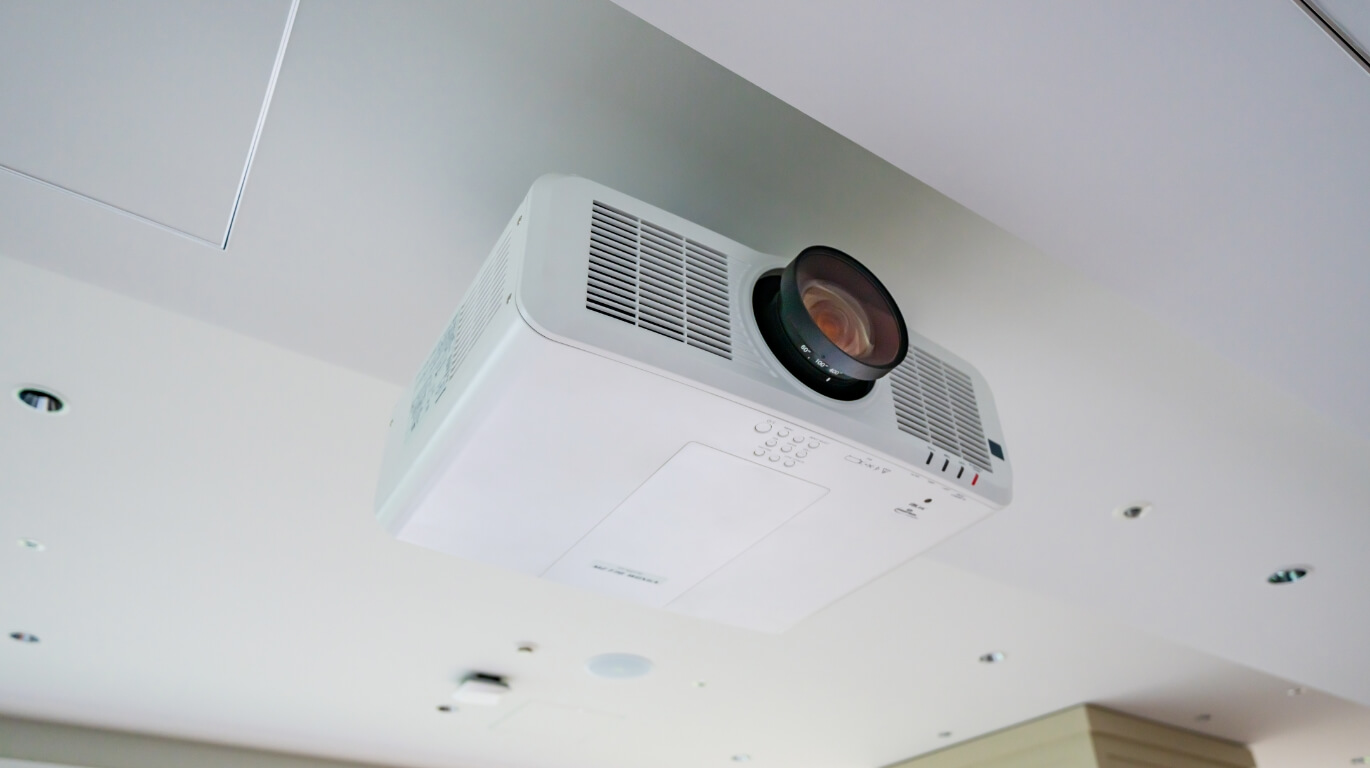
Projector

Laser TV (Projector)
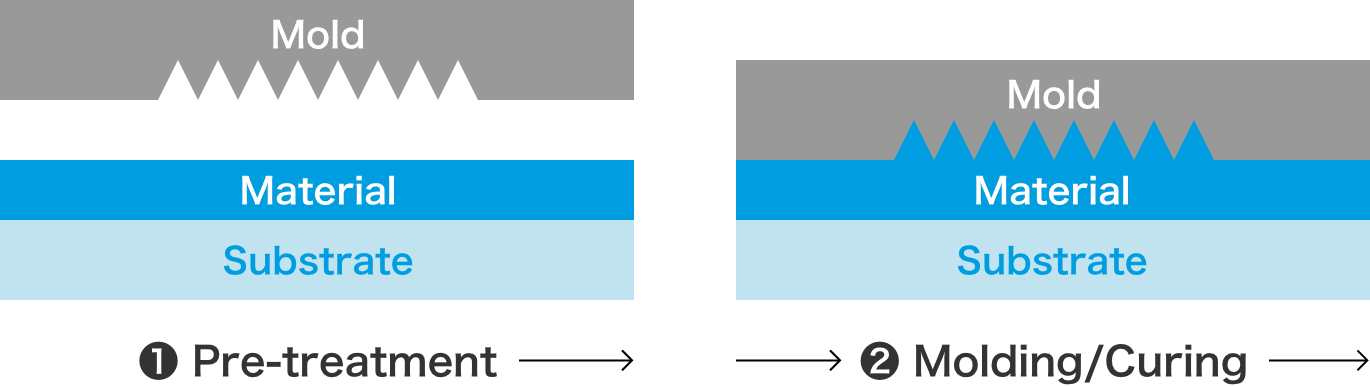
Imprint Manufacturing Process
Imprinting is a manufacturing technology that uses a mold and liquid material to form components. The molding process consists of four steps: pretreatment, molding, demolding, and post-treatment.
Part of the molding process differs depending on the material used. Components are cured by thermal curing for sol-gel materials and by UV curing for organic-inorganic hybrid materials.
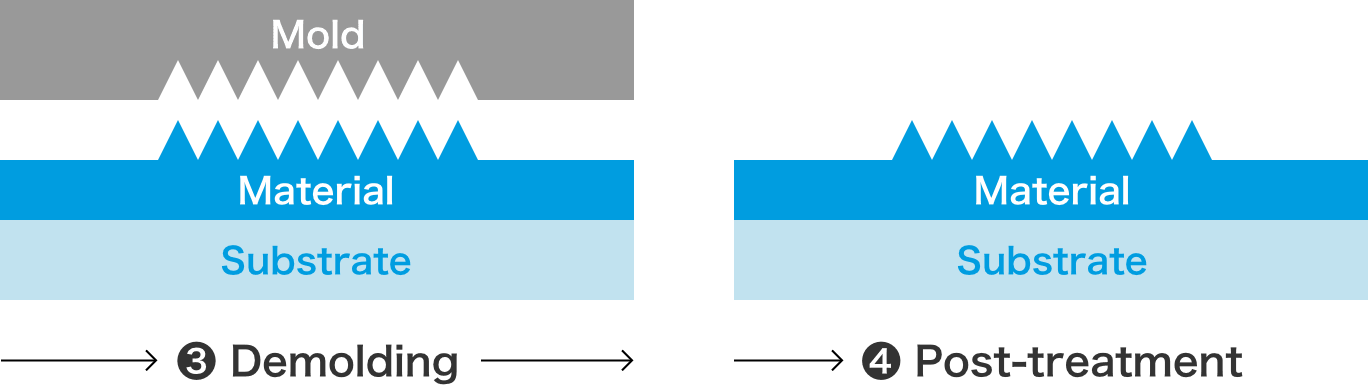
Precision Imprint Technology with Excellent Productivity
The imprint process using molds achieves both stable quality and excellent mass-production capability.
By utilizing high-precision molds fabricated through technologies such as laser writing and electron beam (EB) lithography, optical components can be formed simultaneously over large areas of up to 8 inches.
Examples of Ultra-Fine Microstructures
By using precision molds in the imprint process, diffraction gratings and diffractive optical elements (DOEs) with ultra-fine microstructures can be fabricated.
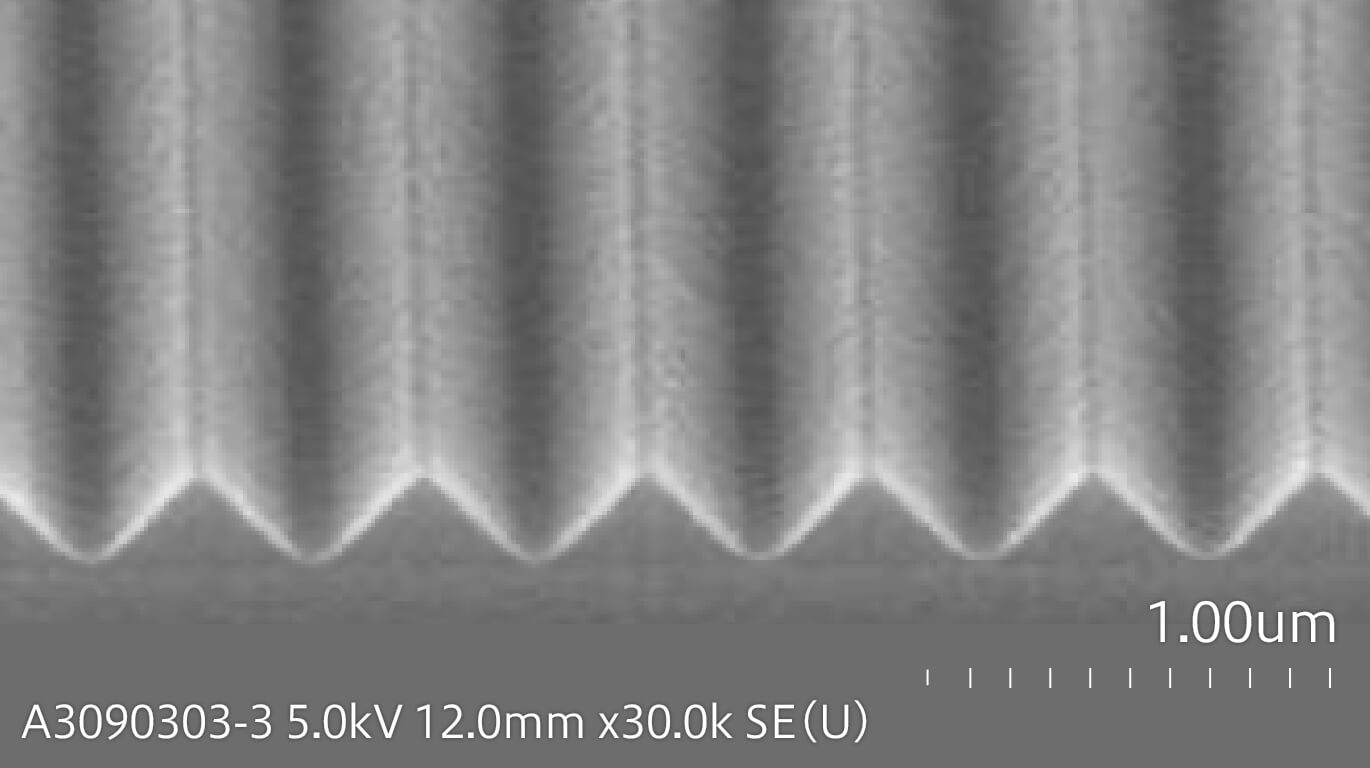
Structure Example (1): V-Groove
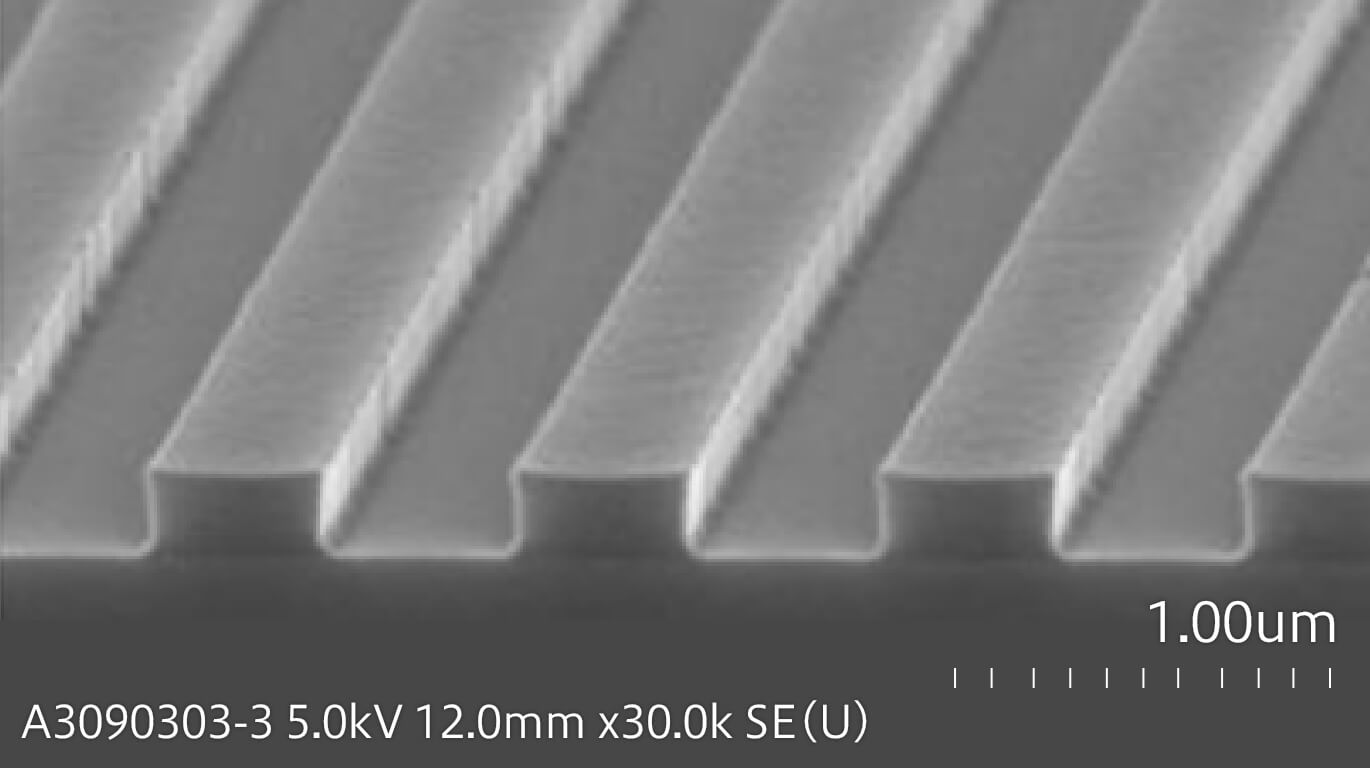
Structure Example (2): Rectangular Profile
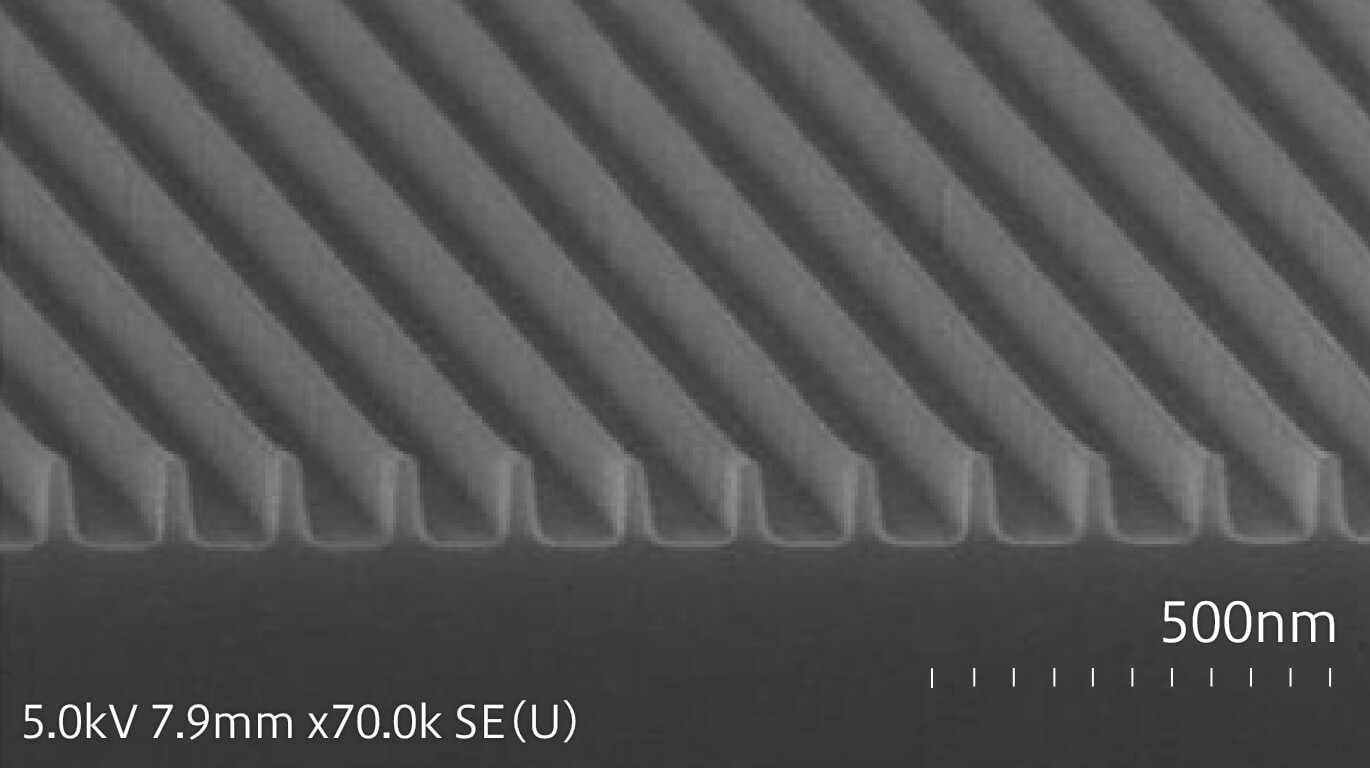
Structure Example (3): High-Aspect-Ratio Rectangular Profile
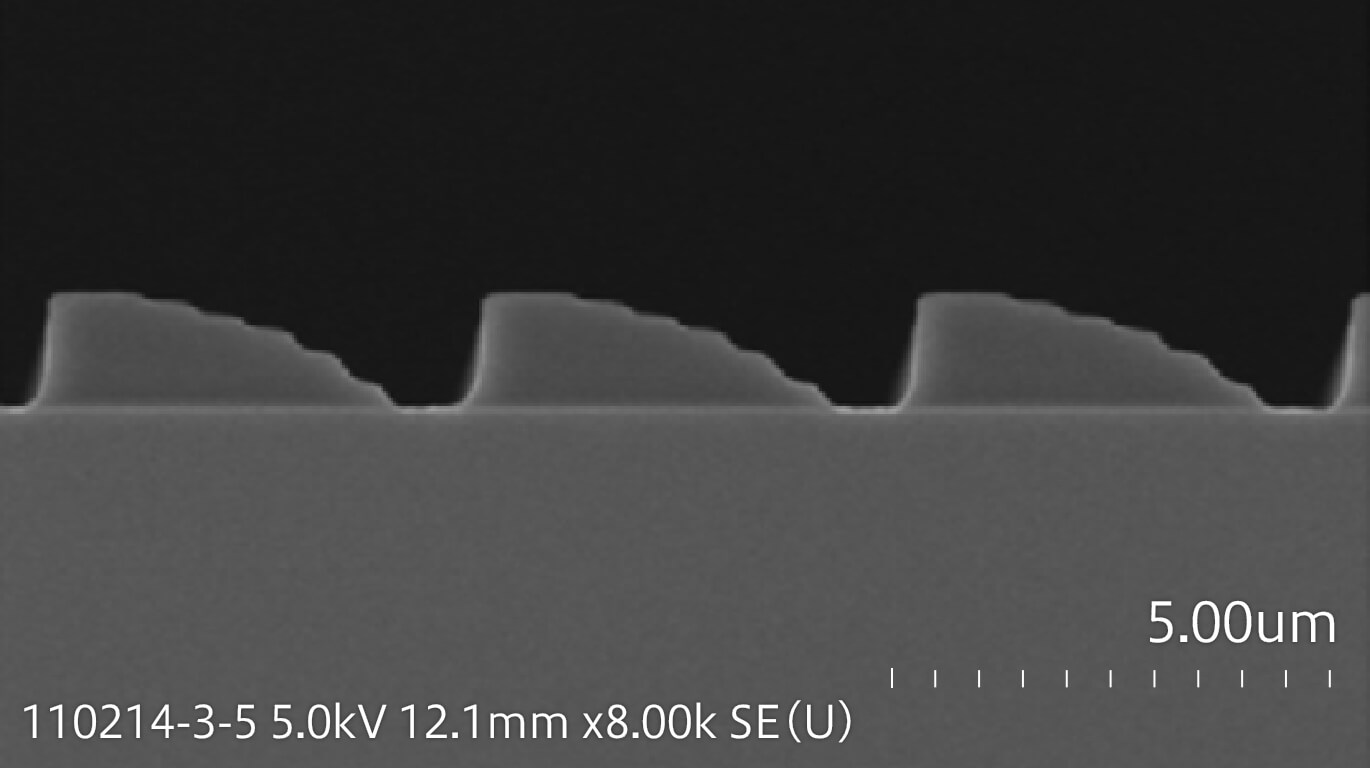
Structure Example (4): Blazed Structure
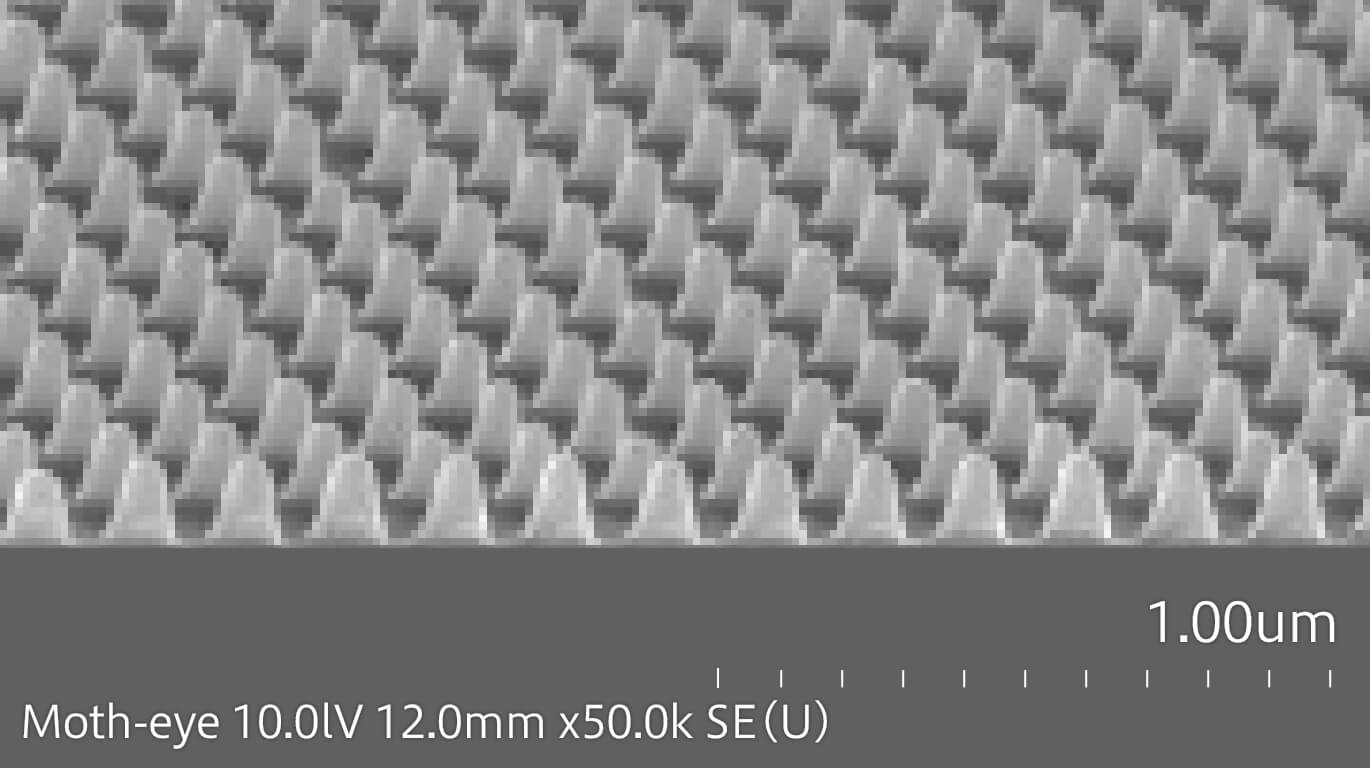
Structure Example (5): Moth-Eye Structure
Reference Specifications
Examples of manufacturable structures are shown in the reference specification table. Structures outside the ranges listed in the table may also be manufacturable. Please contact us for details.
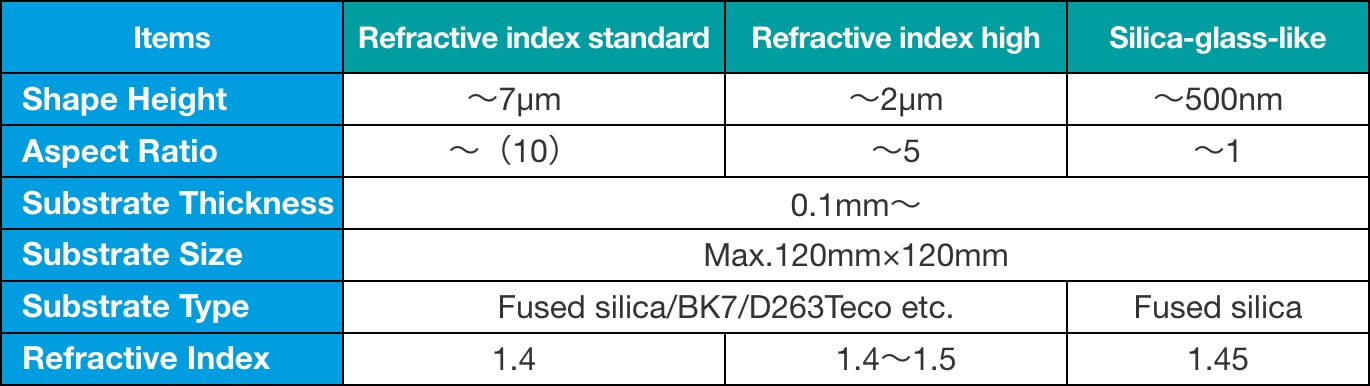
Reference Specification Table
Analytical Instruments
NSG can provide high-efficiency diffraction gratings with diffraction efficiency exceeding 90% for spectroscopic analysis systems.
By utilizing sol-gel glass materials, these gratings offer excellent heat resistance and durability, delivering stable optical performance even in demanding operating environments. Custom design and fabrication are also available to meet specific application requirements and operating conditions.

Analytical Instrument
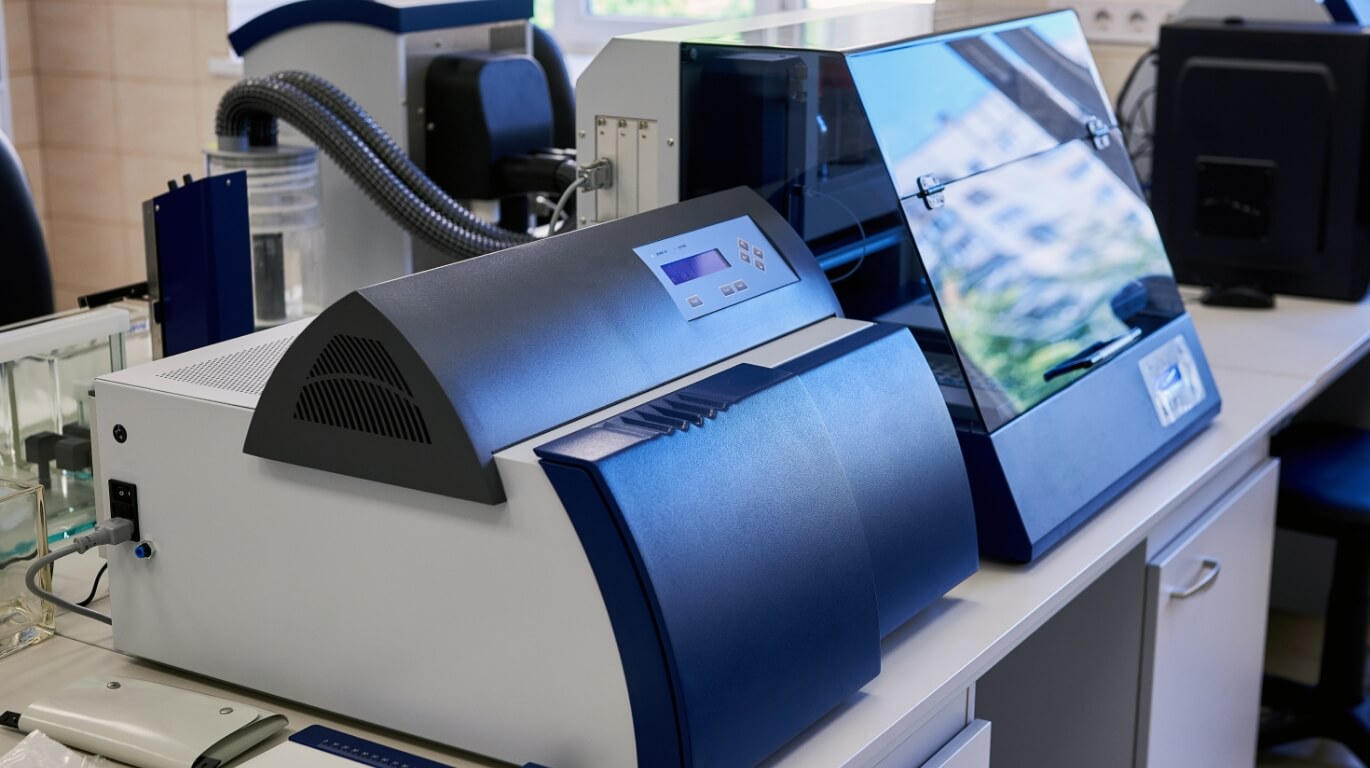
Spectroscopic Analysis System
Projectors
The use of DOEs helps improve the efficiency of projector optical systems and contributes to miniaturization.
Highly efficient light control enables a reduction in component count and shorter optical paths, while microstructured DOEs support compact optical designs. The imprint manufacturing process allows stable mass production of DOEs with fine structures while maintaining consistent quality.
Projector
Laser TV (Projector)
Automotive Applications
These products can also be used in automotive applications where durability is required, including Head-Up Displays (HUDs) and LiDAR systems.

Head-Up Display (HUD)

LiDAR
Other Applications
These products are also used in a variety of other applications, including semiconductor inspection equipment and laser processing systems.
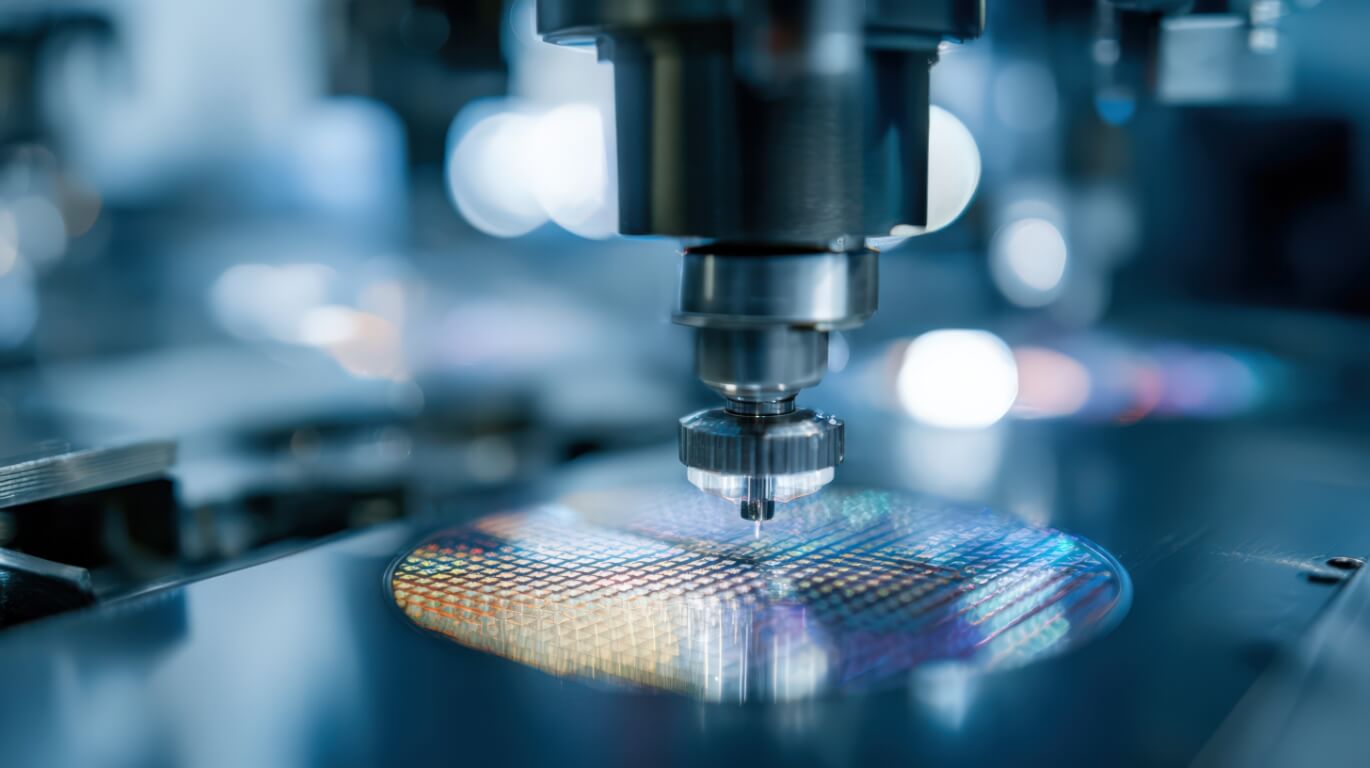
Semiconductor Inspection Equipment
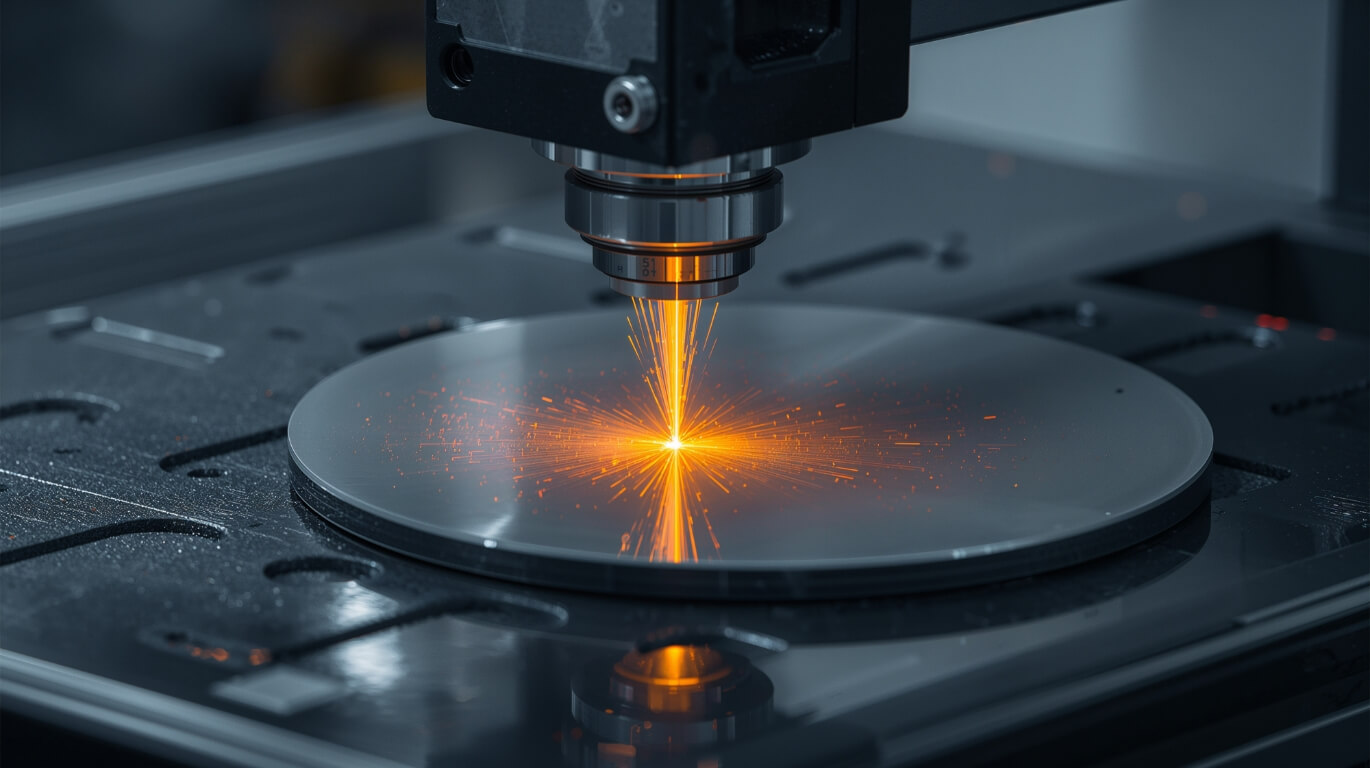
Laser Processing System
FAQ
What optical functions can diffraction gratings and DOEs provide?
Diffraction gratings and DOEs (Diffractive Optical Elements) utilize diffraction and interference of light to precisely control propagation direction, intensity distribution, and wavefront characteristics. By combining proprietary sol-gel glass materials with imprint technology, NSG can provide diffraction gratings with high precision, excellent heat resistance, and suitability for mass production.
Can anti-reflection performance be added to diffraction gratings and DOEs?
Yes. Reflection can be reduced by applying anti-reflection (AR) coatings. Various AR coating designs are available. Please contact us with your required wavelength range.
Contact us for details.Is there significant shape variation in mass production?
No. The use of mold-based imprint technology provides high replication accuracy and stable dimensional control, enabling a reliable and consistent product supply.
Are there any structures that cannot be molded?
NSG has experience producing high-aspect-ratio rectangular structures with aspect ratios of up to 10. Please consult us regarding specific structure requirements.
Contact us for details.Can structures be formed on curved surfaces such as lenses?
In general, molding on curved surfaces is difficult. However, structures may be formed on surfaces with relatively low curvature.
Contact us for details.What is the transmission wavelength range?
For sol-gel glass materials, the transmission wavelength range is 200–2000 nm. For organic-inorganic hybrid materials, the transmission wavelength range is 400–2000 nm.
How are imprint molds fabricated?
High-precision molds are fabricated using technologies such as electron beam (EB) lithography and laser writing.
Is prototyping possible using customer-supplied substrates?
Yes. We will discuss the requirements in advance and evaluate feasibility together with the customer.
Contact us for details.What is the typical lead time for prototyping?
The lead time depends on the type of optical element required. Please contact us to discuss your specific requirements.
Are samples available?
Yes. Samples may be provided depending on project details and product availability, including certain non-standard products.
Contact us for details.How long does custom design and prototyping take?
The lead time depends on the design specifications and timing of the order.
Contact us for details.What is miGIO®?
miGIO® is the brand name for NSG's family of micro-optical products.