Diffuser
NSG's high-performance diffuser combines proprietary sol-gel glass materials with imprint technology, offering excellent durability for projector and sensing applications.

Product summary
By combining NSG's proprietary sol-gel glass materials or organic-inorganic hybrid materials with imprint technology, optical components with ultra-fine structures and excellent durability can be produced. Compared with conventional methods, this process enables high-quality, cost-effective production of diffusers, diffraction gratings, DOEs and MLAs.
NSG's diffusers feature numerous micro lenses formed on a glass substrate. Optimized lens shapes and layouts suppress interference fringes and bright spots while providing a variety of light diffusion patterns.
All-inorganic diffusers can be fabricated using sol-gel glass materials. Organic-inorganic hybrid materials can also be used to produce wide-angle diffusers.
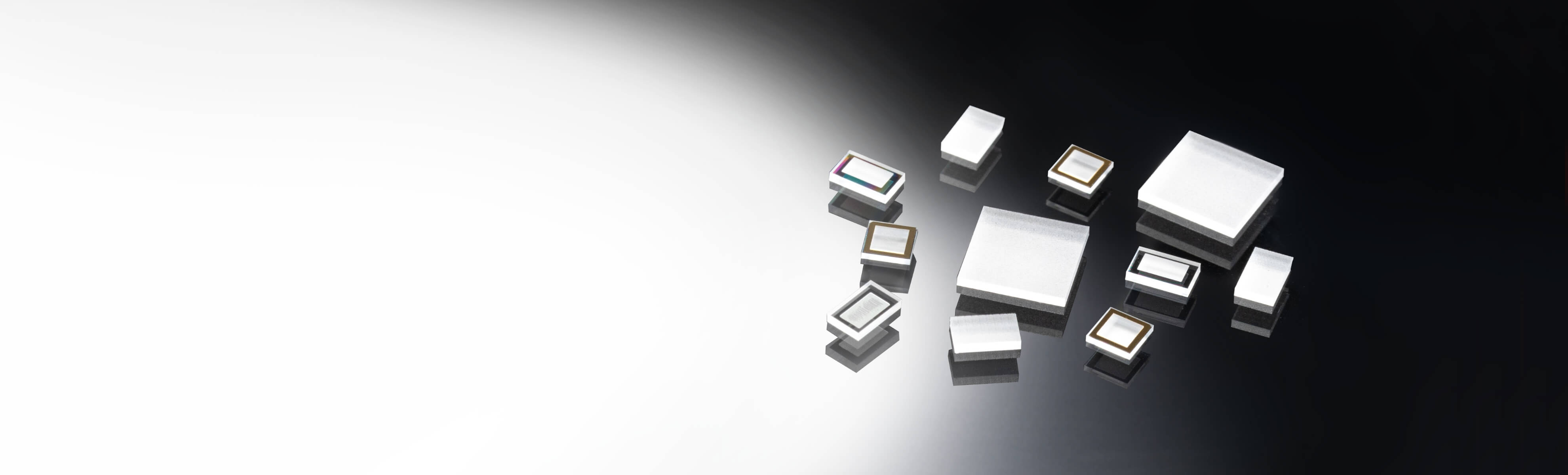
Diffuser Utilizing NSG Proprietary Materials
NSG offers the optimum imprint material for glass substrates from its proprietary sol-gel glass materials and organic-inorganic hybrid materials, according to application requirements.
The sol-gel glass material provides heat resistance above 500°C, while the organic-inorganic hybrid material offers heat resistance above 330°C. These materials exhibit excellent thermal stability suitable for semiconductor manufacturing processes such as reflow soldering, as well as outstanding mechanical properties including chemical resistance, laser resistance, and low thermal expansion.
The sol-gel glass material is available over a transmission wavelength range of 200–2,000 nm, while the organic-inorganic hybrid material covers 400–2,000 nm, enabling use across a broad spectral range from the visible to near-infrared region.
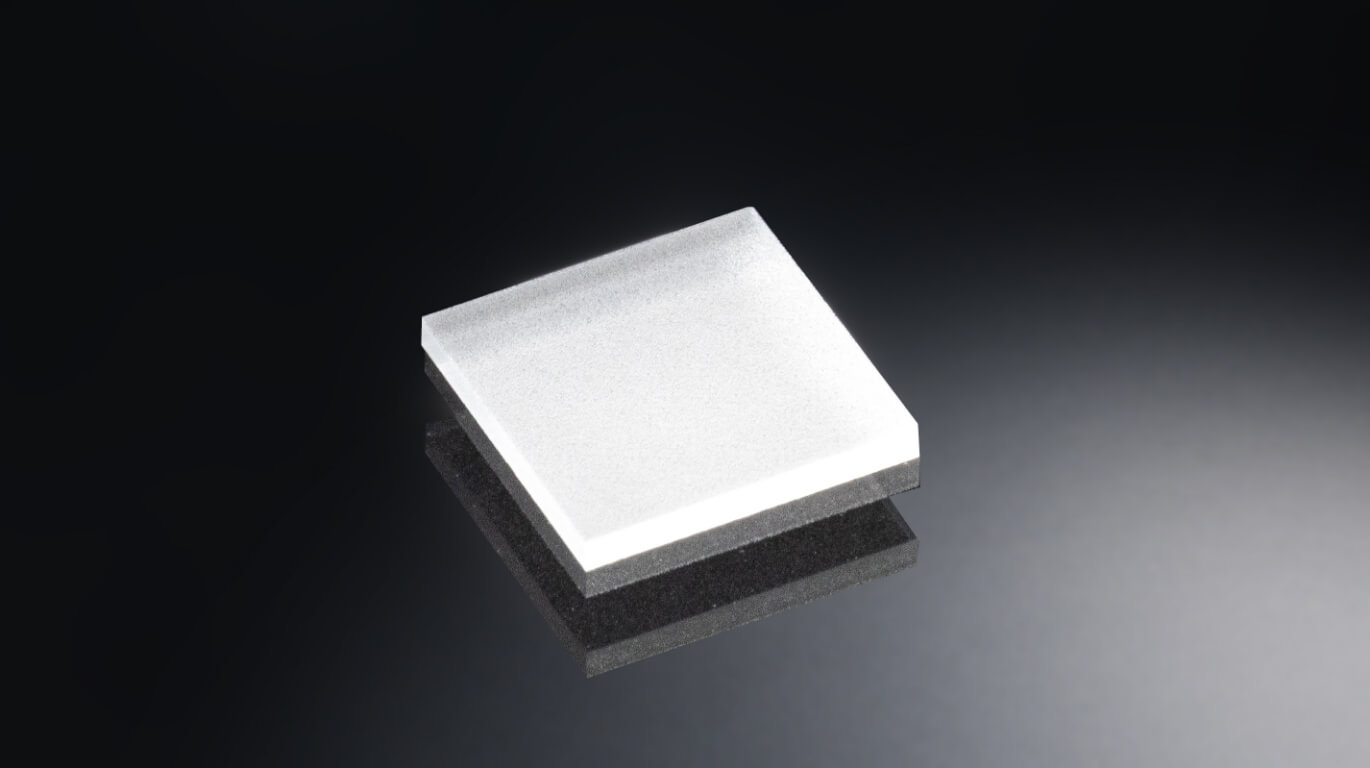
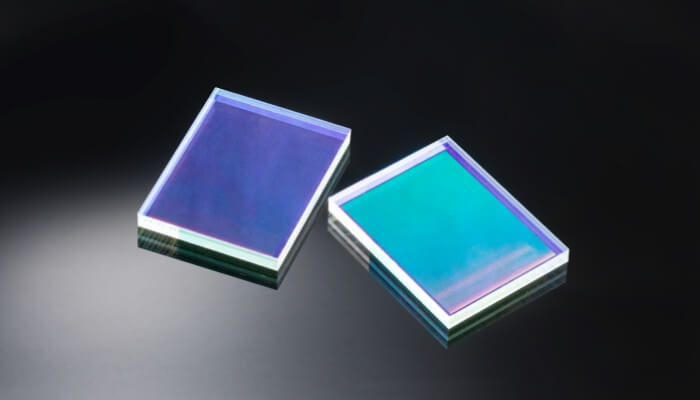
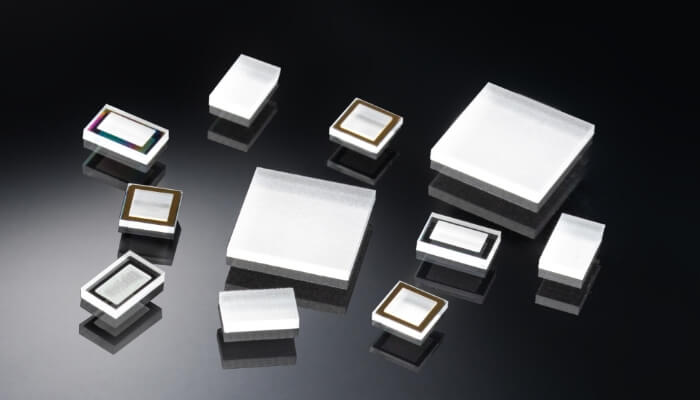
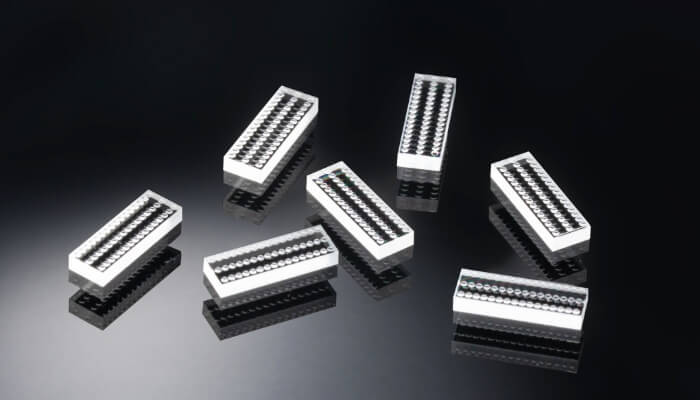
Diffuser Appearance
High-Performance Microlens Diffuser
This diffuser incorporates a large number of microlenses formed on the surface of a glass substrate. The refractive effect of the microlenses provides efficient light diffusion while maintaining high optical transmittance.
A variety of diffusion profiles, including Flat-Top and Batwing distributions, can be achieved through precise control of microlens geometry. In addition, optimized microlens layouts help minimize unwanted interference patterns and hot spots.
Customized designs, including diffusers with integrated electrodes, are also available.
Speckle Reduction for Laser Projectors
Diffusers are widely used in projector systems to reduce laser speckle. NSG offers highly heat-resistant diffusers designed to accommodate increasing laser power levels.
By combining NSG's proprietary sol-gel glass materials with precision imprint technology, these diffusers provide high durability together with high optical transmittance.
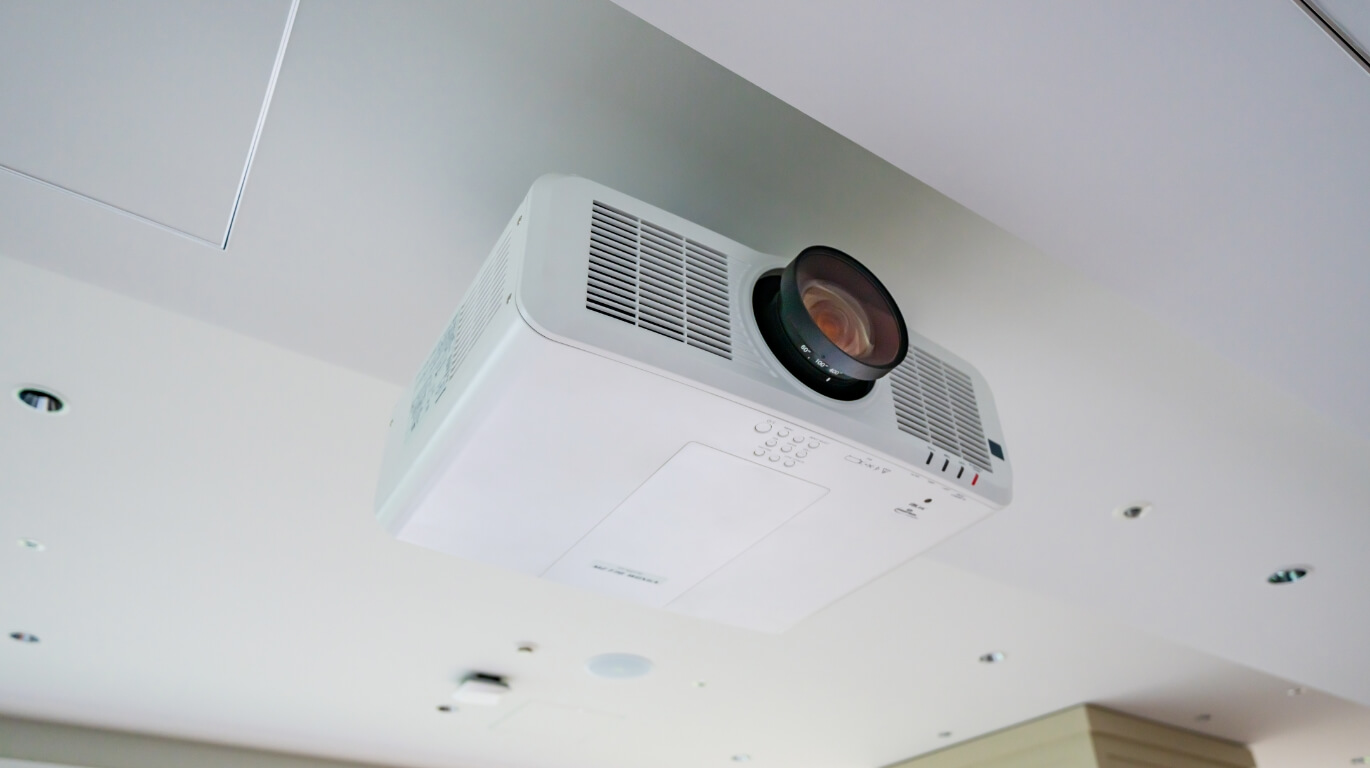
Projector

Laser TV (Projector)
Imprint Manufacturing Process
Imprinting is a manufacturing technology that uses a mold and liquid material to form components. The molding process consists of four steps: pretreatment, molding, demolding, and post-treatment.
Part of the molding process differs depending on the material used. Components are cured by thermal curing for sol-gel materials and by UV curing for organic-inorganic hybrid materials.
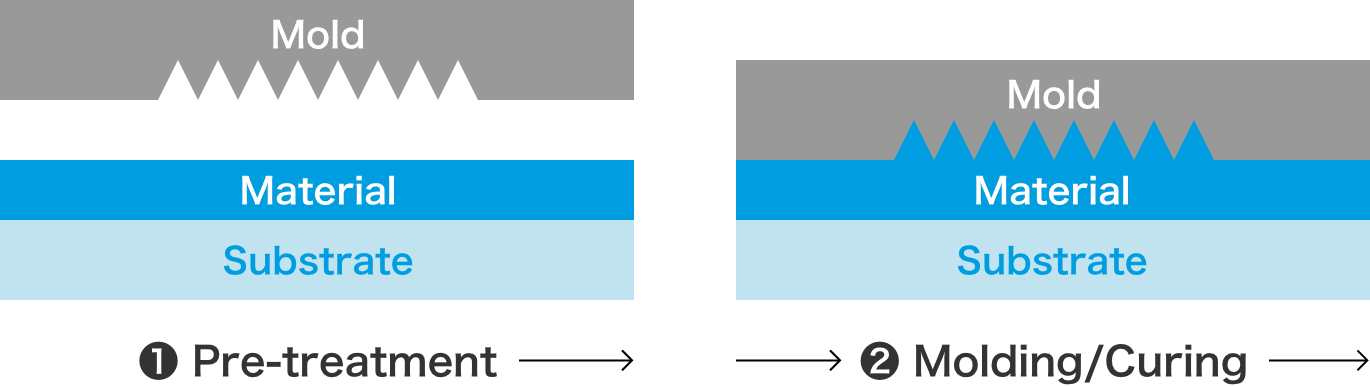
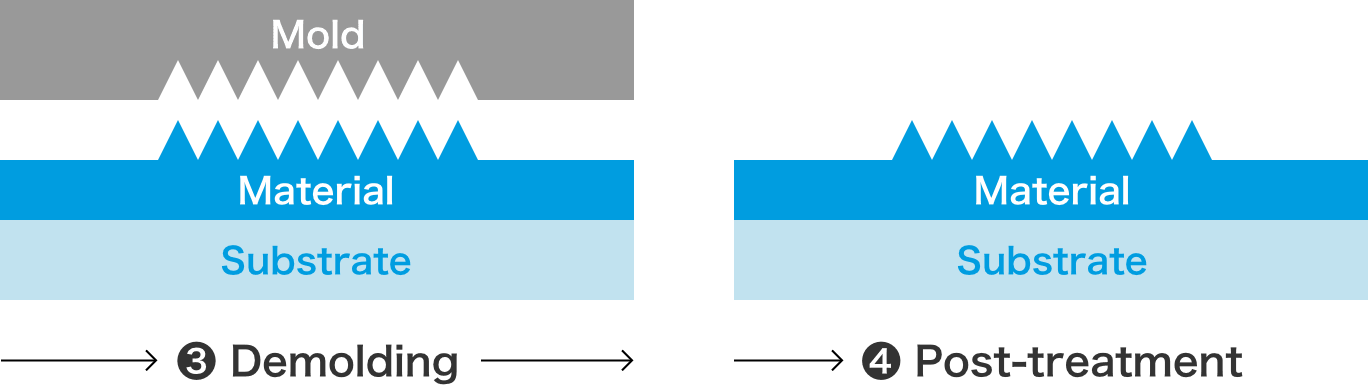
Precision Imprint Technology with Excellent Productivity
The imprint process using molds achieves both stable quality and excellent mass-production capability.
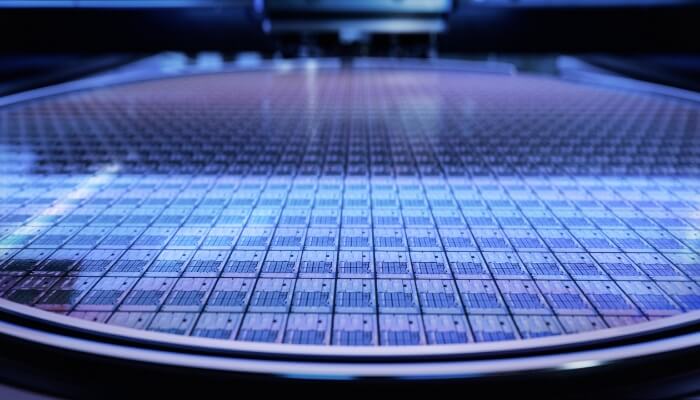
By utilizing high-precision molds fabricated through technologies such as laser writing and electron beam (EB) lithography, optical components can be formed simultaneously over large areas of up to 8 inches.
Examples of Light Diffusion Characteristics
The required illumination profile, diffusion angle, and intensity distribution vary depending on the application. For example, in diffusers for ToF (Time of Flight) cameras, the illumination area is typically rectangular, and the illumination field of view must match the camera field of view.
NSG's microlens-type diffusers can achieve a wide range of diffusion characteristics by adjusting the lens geometry and lens arrangement.
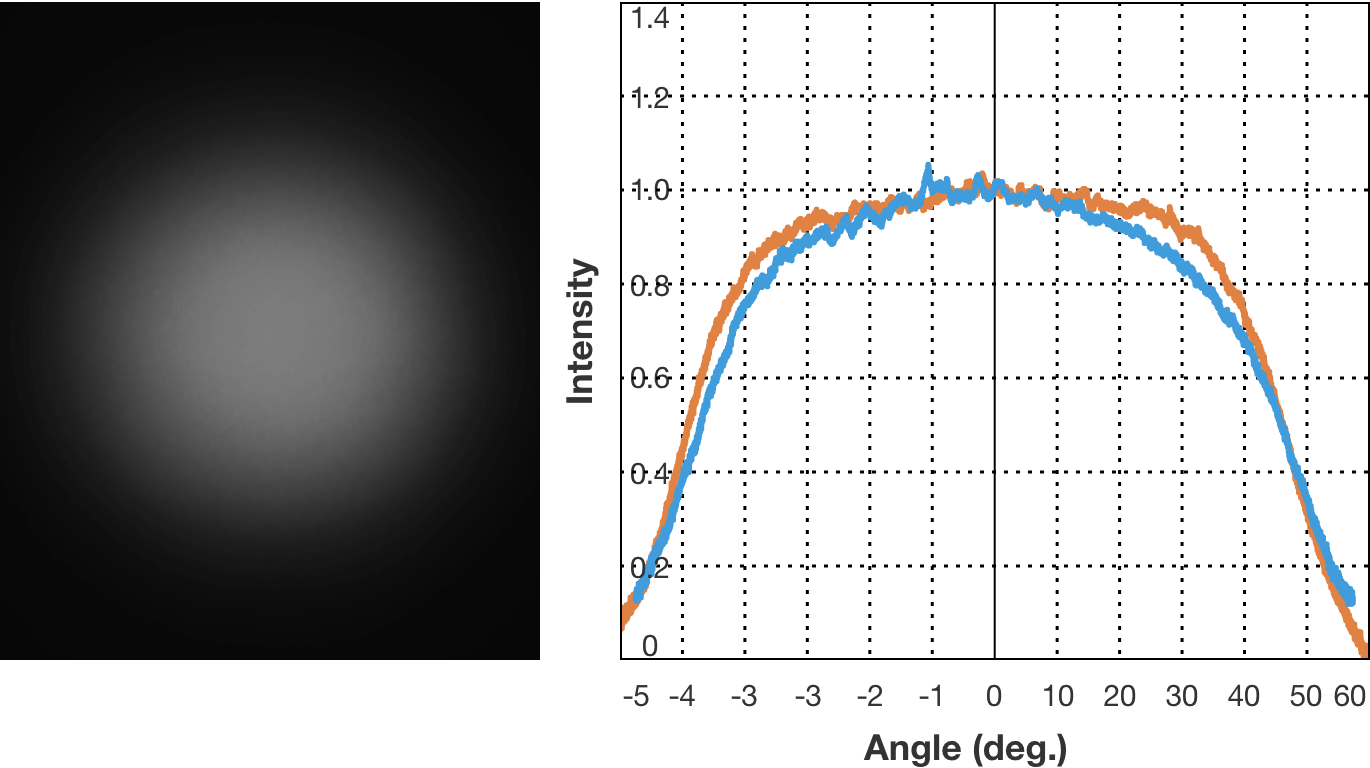
Example Diffusion Pattern (1): Circular, 95°, Flat-Top
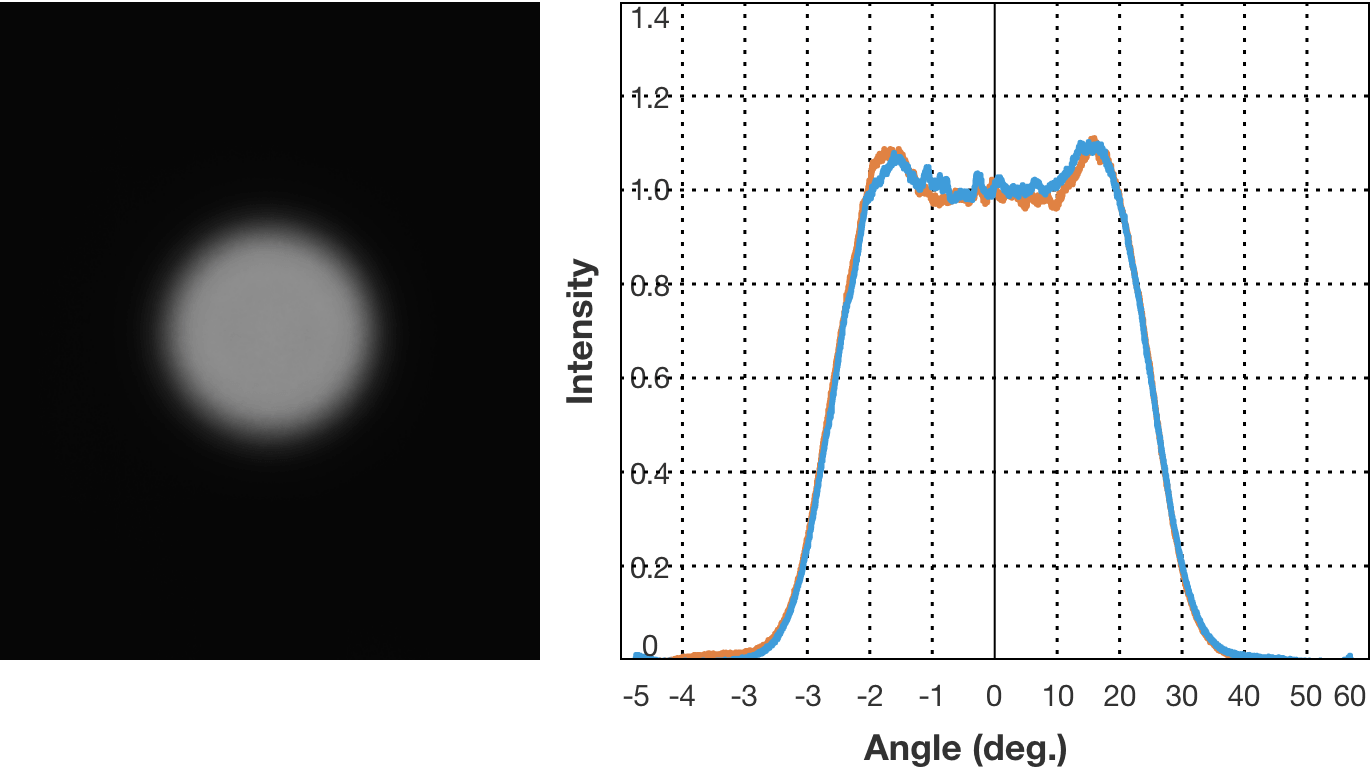
Example Diffusion Pattern (2): Circular, 50°, Batwing
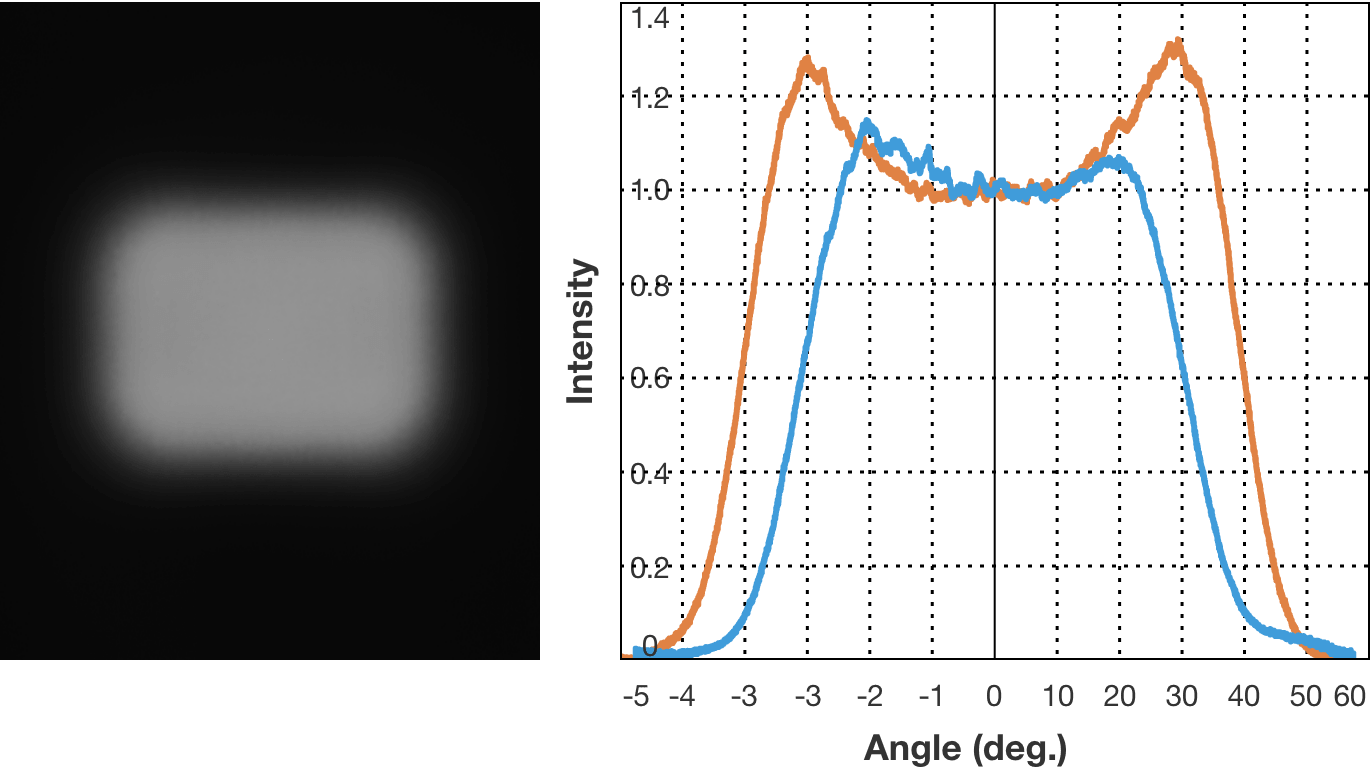
Example Diffusion Pattern (3): Rectangular, 82° × 64°, Batwing
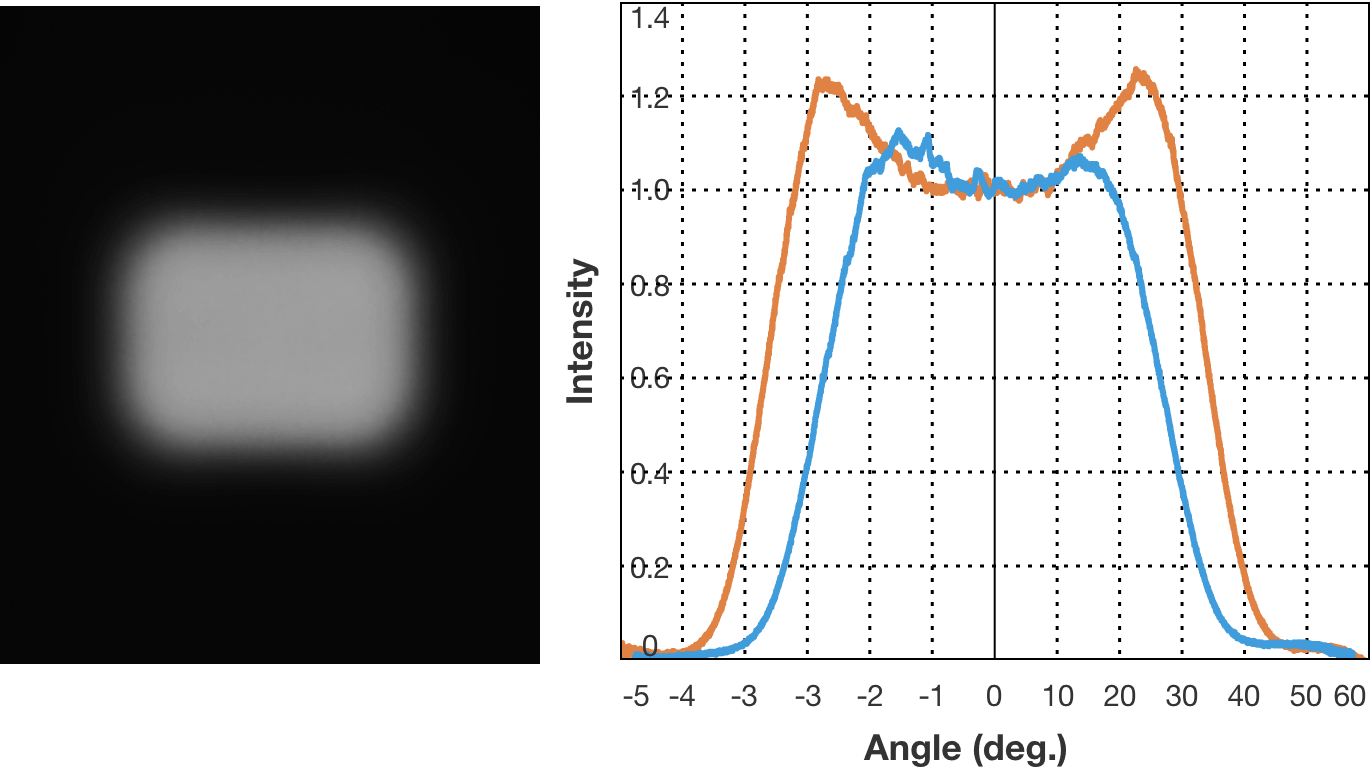
Example Diffusion Pattern (4): Rectangular, 72° × 56°, Batwing
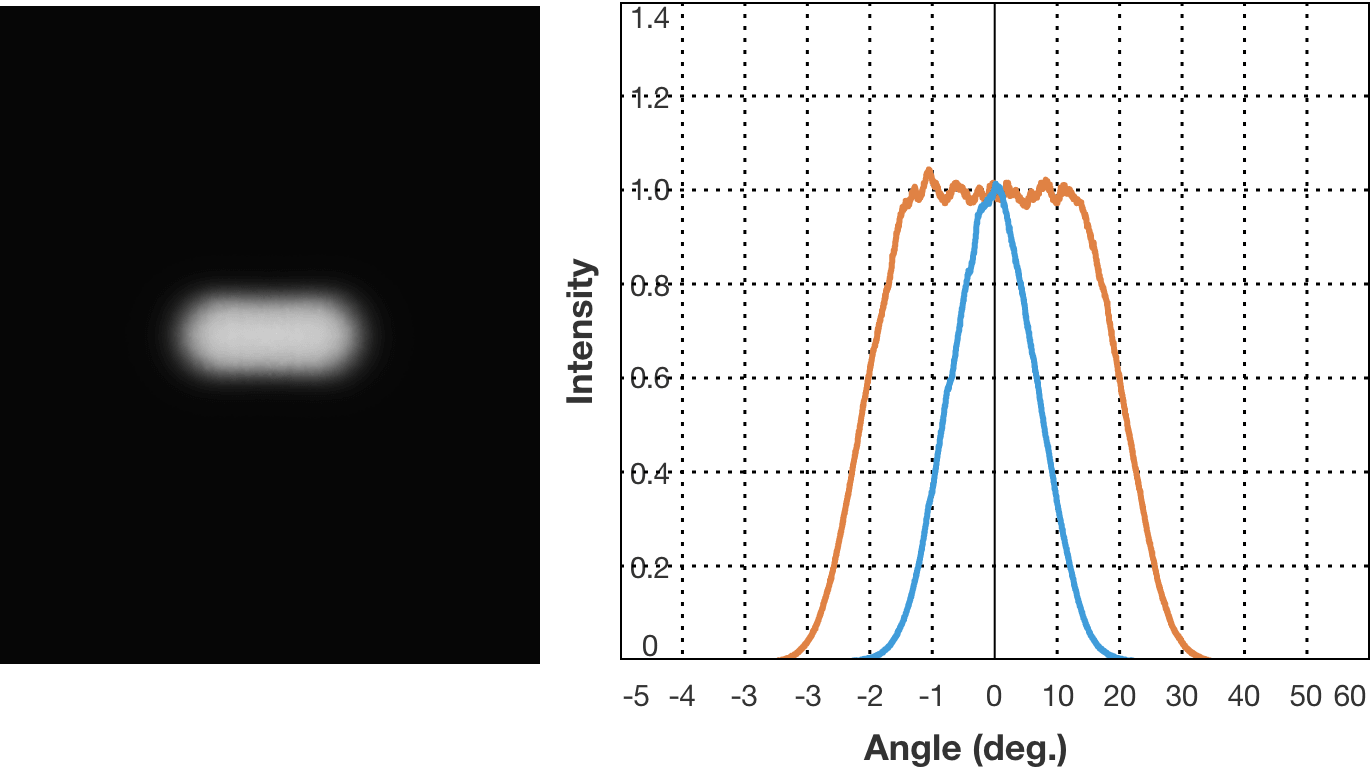
Example Diffusion Pattern (5): Rectangular, 44° × 16°, Flat-Top
Illumination Unit for ToF (Time of Flight) Cameras
A ToF (Time of Flight) camera measures the distance to an object based on the time it takes for light emitted from the device to reflect off the object and return to the device.
The illumination unit used in such systems is required to illuminate the measurement area (within the camera field of view) as uniformly and as brightly as possible. Since the emission angle of the light source (typically a laser) is generally only several degrees to approximately 20 degrees, it cannot cover the entire camera field of view by itself.
By passing the laser beam through a diffuser and expanding it to the required emission angle, distance measurement can be performed throughout the camera field of view.
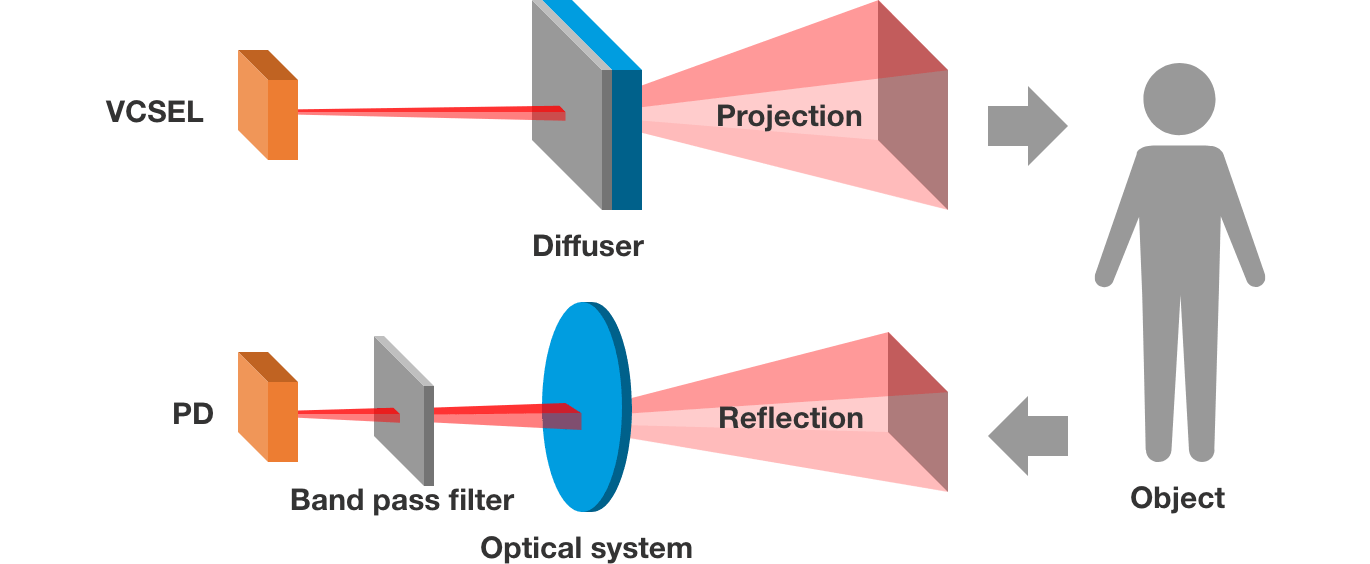
Measurement Principle of a ToF Camera
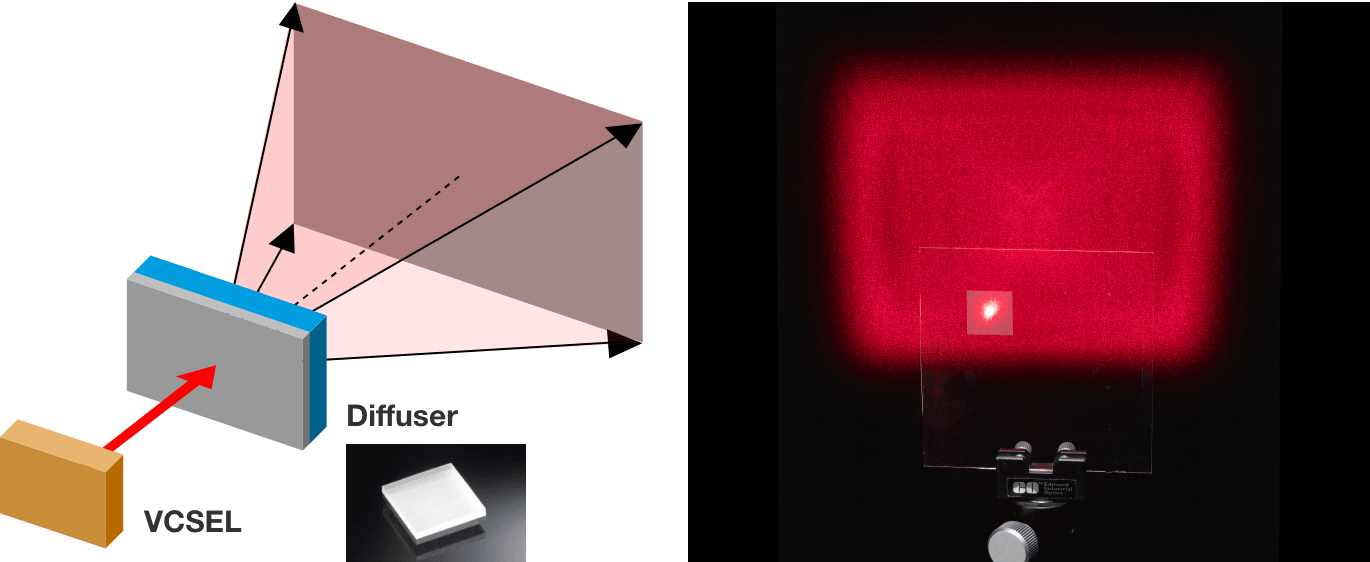
Diffuser Application Example
Super-wide angle lighting unit
A diffuser and a meniscus lens can be integrated to form an ultra-wide-angle illumination unit with a diffusion angle exceeding 180 degrees.
This is effective for applications requiring illumination over a wide area, such as surveillance cameras and occupant monitoring systems in automobiles.
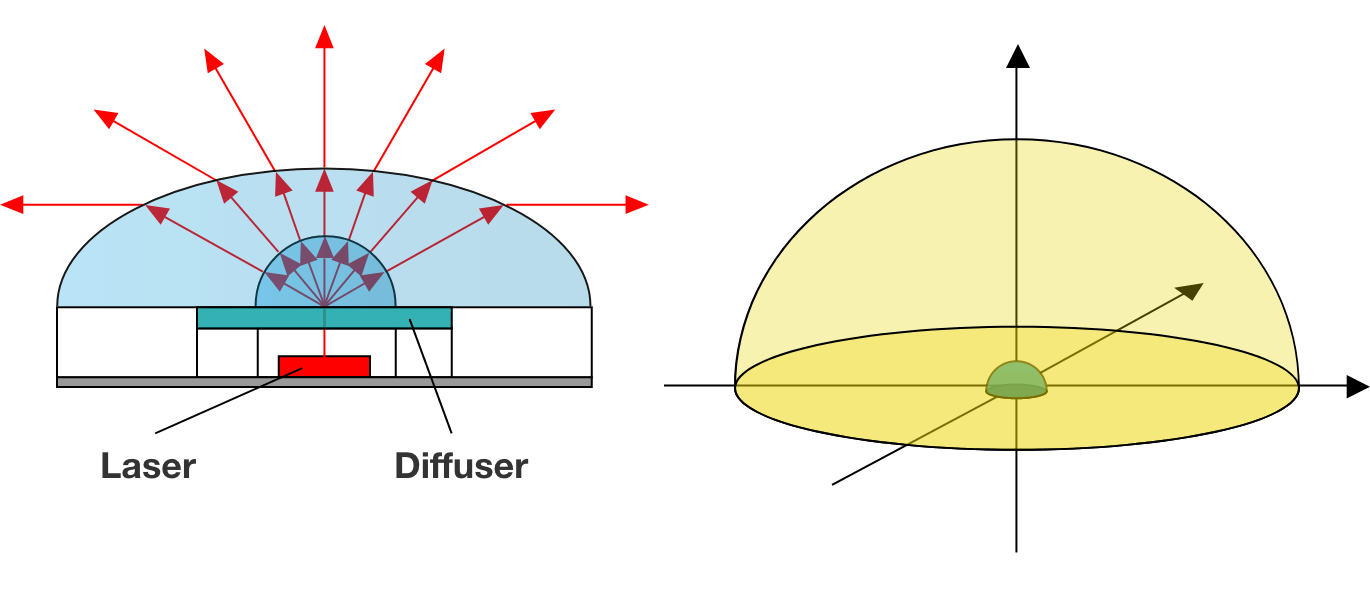
Cross-Section of Illumination Unit / 180° Wide-Angle Emission
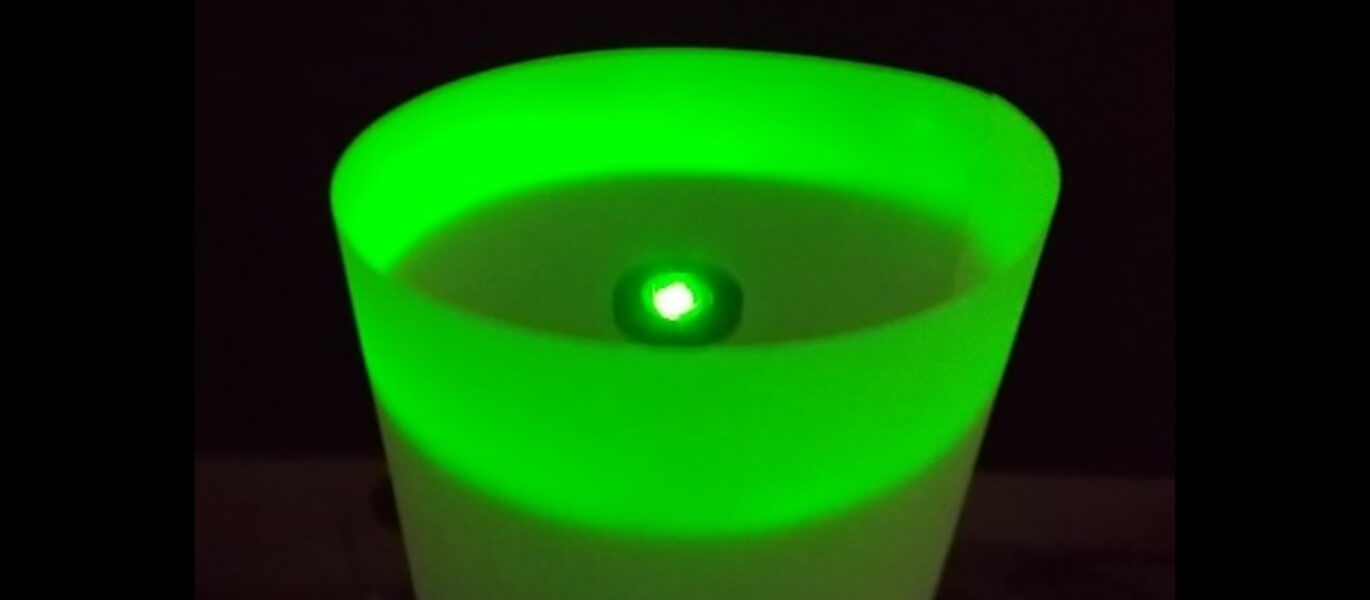
Demonstration Using a Laser Pointer
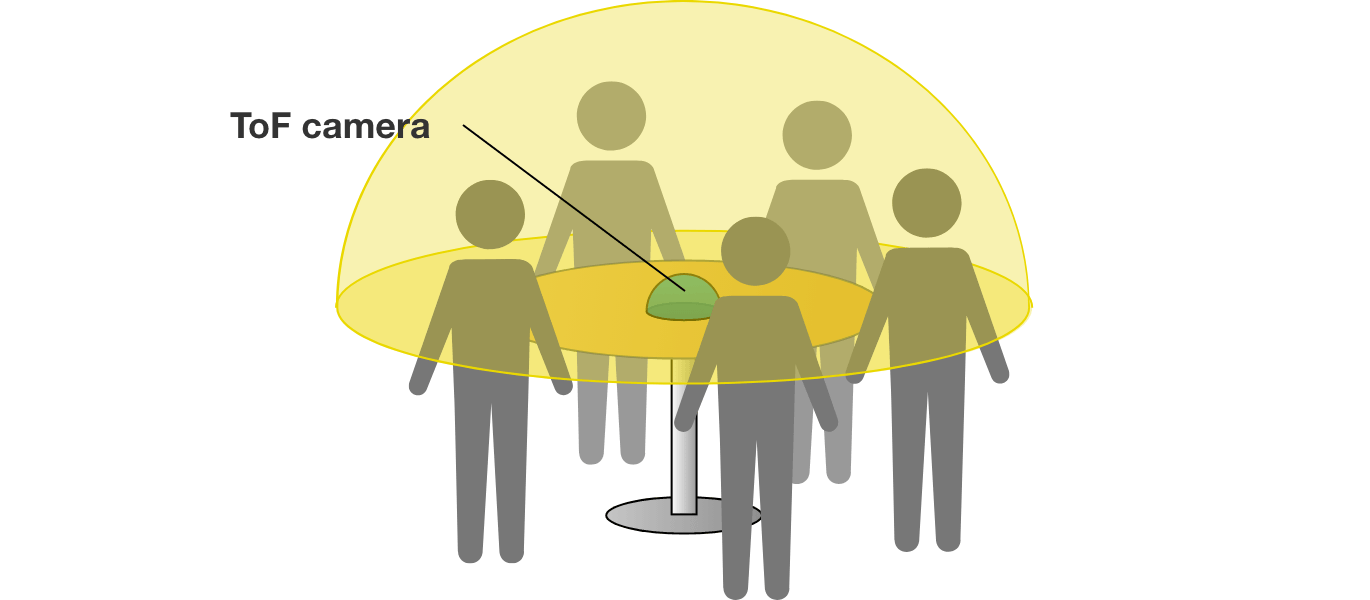
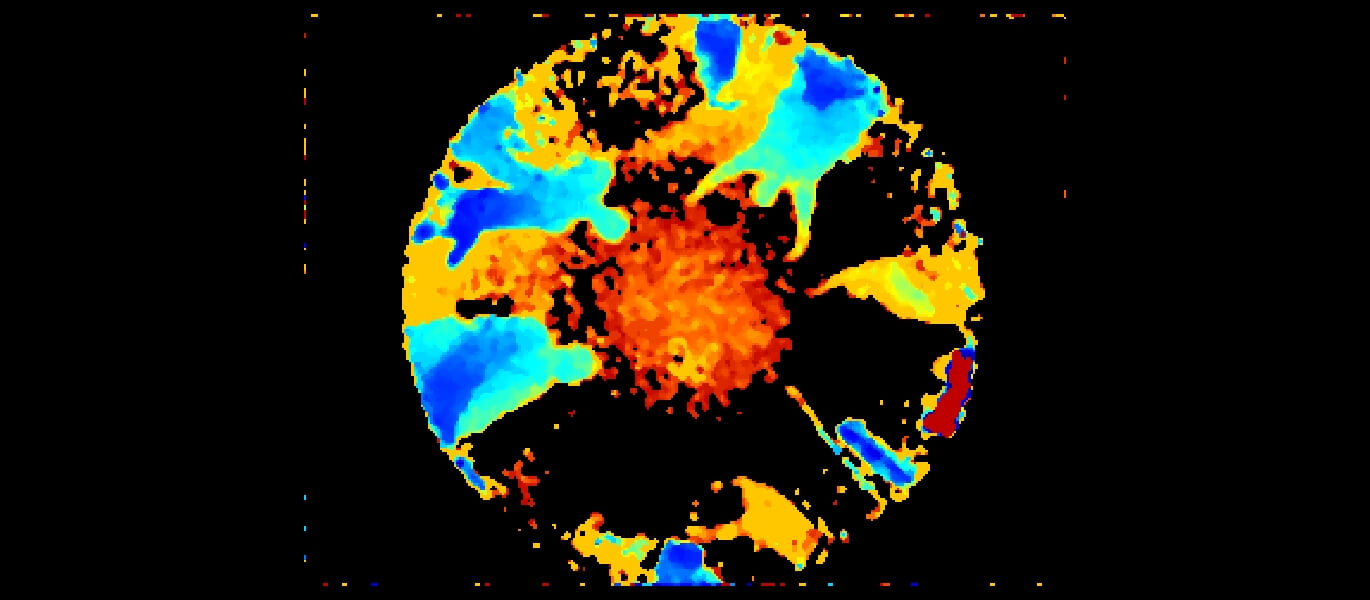
Application Example: Distance Image Captured at 180° Wide Angle in Combination with a ToF Camera
Projectors
In projector applications, diffusers are used as a countermeasure against speckle. NSG can provide highly heat-resistant diffusers designed to accommodate increasing laser power levels.
By combining NSG's proprietary sol-gel glass materials with imprint technology, these diffusers achieve both high durability and high optical transmittance.
Projector
Laser TV (Projector)
Smartphones
NSG is also capable of manufacturing optical components such as diffusers and DOEs for smartphone sensor applications.
Using NSG's proprietary organic-inorganic hybrid materials, which are compatible with high-temperature reflow processes, these optical components provide excellent heat resistance, durability, and optical transmittance. Manufactured using imprint technology, they can be mass-produced with stable quality while maintaining high precision, even for applications requiring large production volumes.

Smartphone Optical Sensor

Smartphone Optical Sensor
Automotive Applications
These products can also be used in automotive applications where durability is required, including Head-Up Displays (HUDs), LiDAR systems, and Driver Monitoring Systems (DMS/OMS/CPD).

Driver Monitoring System (DMS/OMS)

LiDAR
Other Applications
These products can also be used in a wide range of other applications, including measuring instruments and semiconductor inspection equipment.

Measuring Instrument
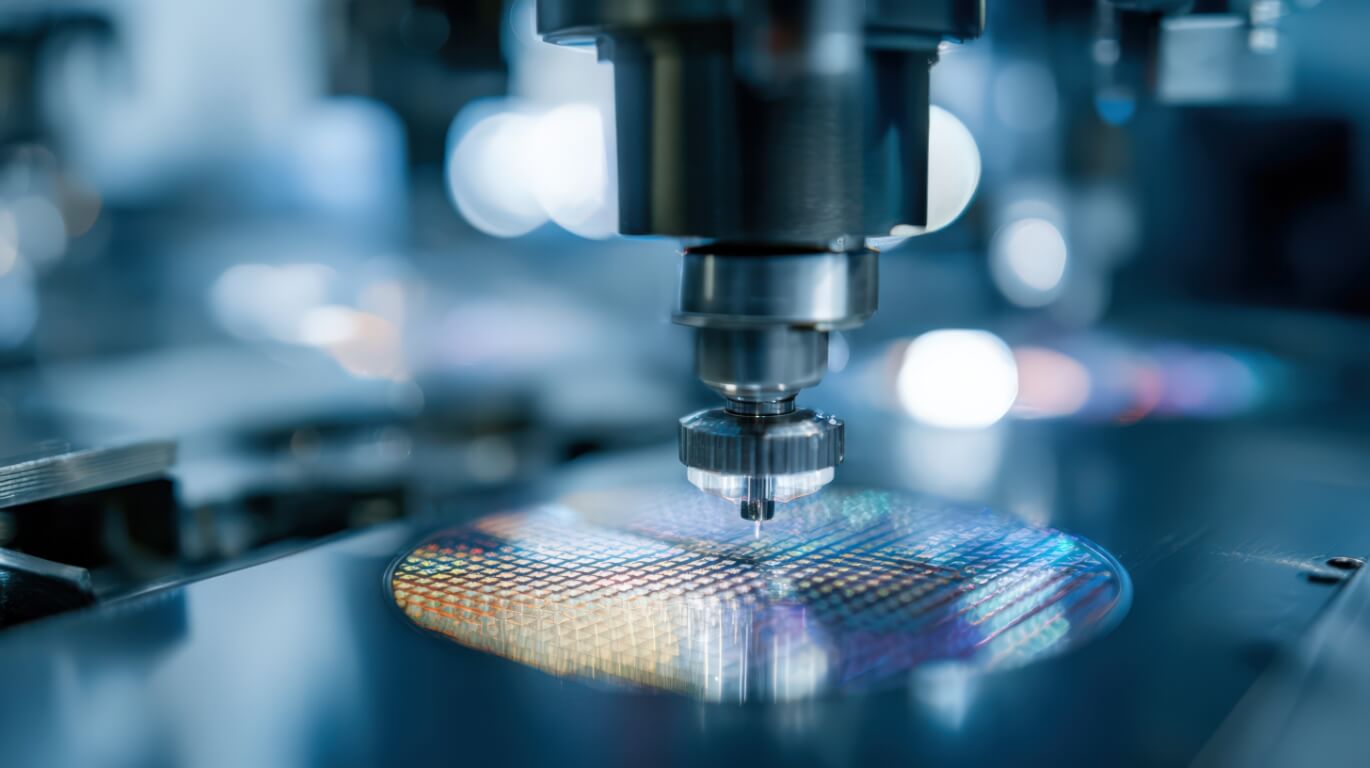
Semiconductor Inspection Equipment
FAQ
What optical functions can a diffuser provide?
A diffuser is an optical component that distributes light uniformly.
NSG's diffusers are microlens-type diffusers that enable more advanced light distribution control than conventional ground-glass diffusers. By combining proprietary sol-gel glass materials or organic-inorganic hybrid materials with imprint technology, NSG can provide diffusers with high precision, excellent heat resistance, and suitability for mass production.
Can anti-reflection performance be added to a diffuser?
Yes. Reflection can be reduced by applying an anti-reflection (AR) coating. Various AR coating designs are available. Please contact us with your required wavelength range.
Contact us for details.Is there significant shape variation in mass production?
No. The use of mold-based imprint technology provides high replication accuracy and stable dimensional control, enabling a reliable and consistent product supply.
Can the light distribution pattern be customized?
Yes. Diffusers can be designed to achieve a wide variety of light distribution profiles. Output patterns can be adjusted to circular, rectangular, elliptical, and other shapes.
What is the maximum diffusion angle?
The maximum diffusion angle of an NSG diffuser alone is 120 degrees. When combined with a lens, light can be spread over angles exceeding 180 degrees.
Can an inorganic diffuser be manufactured?
Yes. Inorganic diffusers can be fabricated using sol-gel technology and are particularly suitable for applications requiring high heat resistance or high ultraviolet transmittance.
What is the transmission wavelength range?
For sol-gel glass materials, the transmission wavelength range is 200–2000 nm.
For organic-inorganic hybrid materials, the transmission wavelength range is 400–2000 nm.
How are imprint molds fabricated?
We manufacture high-precision molds using techniques such as electron beam etching and laser etching.
What thicknesses are available for diffusers?
High-precision molds are fabricated using technologies such as electron beam (EB) lithography and laser writing.
Are there any precautions when handling a diffuser?
The diffuser surface consists of micrometer-scale lens structures. Avoid scratching the surface.
Diffusion characteristics may change if materials with different refractive indices, such as water or adhesives, adhere to the surface.
The structured diffusion surface should face the light source. Using the flat side toward the light source may result in unintended light distribution.
What happens when light enters at an oblique angle?
Since the diffuser is designed for normal incidence, oblique incidence may cause the light distribution pattern to become asymmetric.
Example: a rectangular pattern may become trapezoidal.
Are samples available?
Yes. Samples can be provided depending on project details and product availability, including certain non-standard products.
Contact us for details.How long does custom design and prototyping take?
The lead time depends on the design requirements and order timing, but is typically about 2 to 3 months, including the design phase.
What is miGIO®?
miGIO® is the brand name for NSG’s family of micro-optical products.